


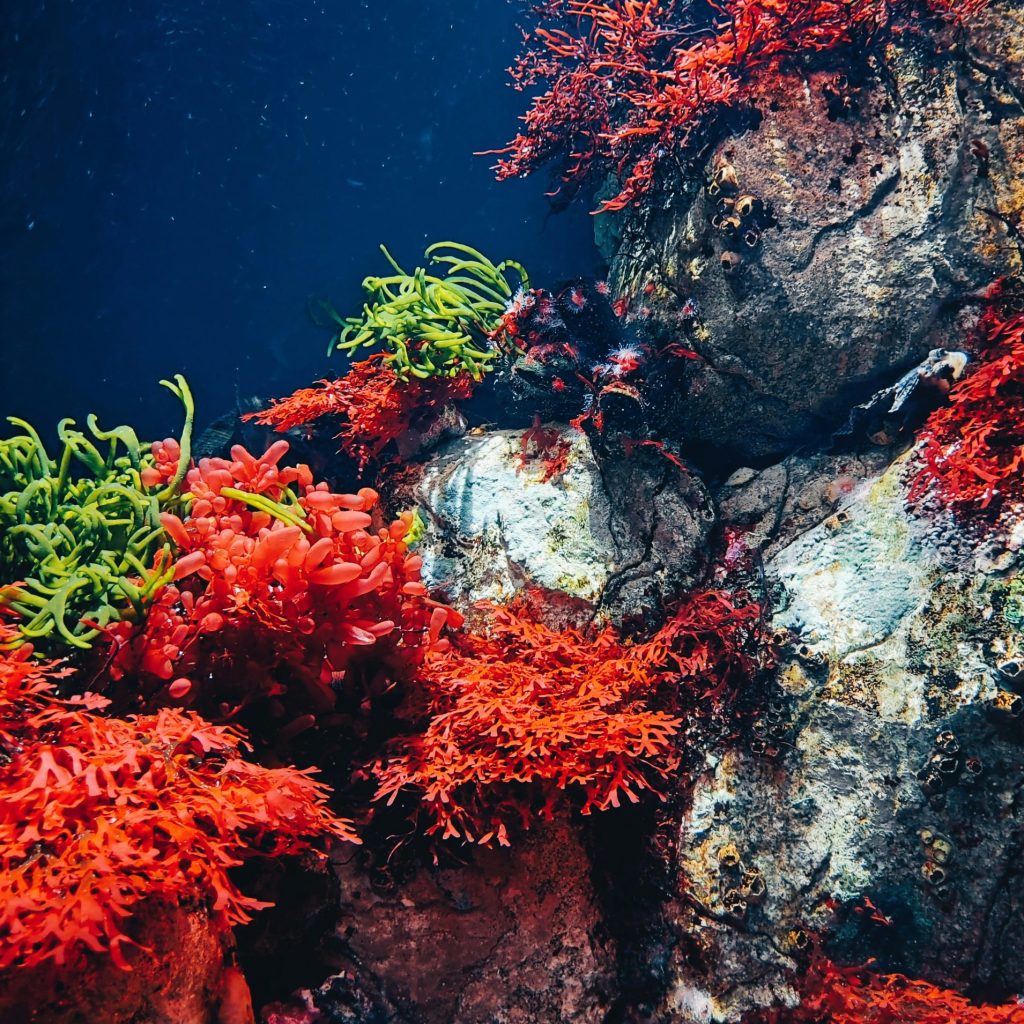
Deep sea mining is fast becoming technologically feasible as a means to supply critical minerals for the energy transition, but it poses profound and potentially irreversible risks to fragile deep ocean ecosystems, climate regulation, and undiscovered biodiversity.
by Theodora De Pasquale
As the demand for critical minerals surges globally to support the energy transition, deep sea mining (DSM) emerges as a seemingly promising frontier. Technologies to extract valuable metals such as copper, nickel, cobalt, and rare earth elements from the ocean floor have rapidly advanced, pushing DSM closer to commercial reality [1]. Yet, beyond questions of feasibility and economics, the environmental and ethical implications cast profound doubts on whether the deep sea should be opened to industrial exploitation [1].
Technological Feasibility: A Rapidly Advancing Frontier
DSM technologies employ remotely operated vehicles capable of operating at abyssal depths – 3,500 to 6,000 meters – to mechanically harvest polymetallic nodules or strip mineral-rich crusts from seamounts [1].
Recent innovations have improved extraction mechanisms, sediment collection, and transport processes, enabling operators to tap vast seabed areas like the Clarion-Clipperton Zone in the Pacific Ocean. Exploration contracts across this million-square-kilometer expanse highlight growing industry activity, backed by nations and mining companies eager to secure access to these critical resources.
However, despite this technological progress, large-scale commercial mining remains unproven at depth, with many practical challenges ahead, including equipment reliability in extreme pressures, logistics of processing and shipping ore, and mitigating sediment plumes and ecosystem disruption [1].
The Environmental Morality of Seabed Exploitation
While DSM could provide metals needed for clean energy technologies, the deep ocean is Earth’s largest and least understood ecosystem. Scientific research paints a concerning picture of potential environmental impacts:
- Irreversible Habitat Destruction: Mining vehicles crush and remove seafloor sediments and nodules, obliterating benthic habitats. These habitats support a diversity of rarely mobile or slow-growing organisms, such as sponges and filter feeders, that are often endemic and highly specialized to stable deep-sea conditions. Studies show these habitats can take decades to centuries, if ever, to recover, highlighting the permanence of damage [2, 3, 4].
- Sediment Plumes and Toxic Dispersal: The extraction process stirs up fine sediments, which disperse over large areas, smothering nearby animal communities and blocking food capture mechanisms [1]. The plumes also carry toxins and alter water chemistry, threatening species beyond the immediate mining footprint. The mortality of deep-sea fish and zooplankton unable to escape these plumes sends cascading risks up marine food webs, potentially impacting commercial fisheries [3].
- Noise and Light Pollution: Machinery operating in the naturally dark and quiet deep sea introduce noise and artificial light, disrupting species communication and behavior. Given that many deep-sea animals rely heavily on sound for navigation and reproduction, such disturbances risk altering ecosystem functions and services in ways not yet fully understood [1].
- Climate and Carbon Cycle Risks: The deep ocean plays a critical role in carbon sequestration. Disturbing sediments could release stored carbon back into the water column and atmosphere, undermining oceanic carbon sinks crucial to climate regulation. Emerging evidence also suggests some nodules contribute to seafloor oxygen production, raising the stakes for ecosystem integrity and global climate feedback [5].
- Loss of Uncatalogued Biodiversity: Deep sea ecosystems host potentially millions of species, many unknown to science. Mining risks extinction of undiscovered life forms, and no biodiversity offsets can compensate for this loss given the unique nature of deep-sea habitats [2].
Ethical Dilemmas and Global Governance Challenges
The moral dilemma is stark: should we extract minerals essential for a green energy future by risking the destruction of ecosystems that support planetary health and biodiversity? The United Nations Convention on the Law of the Sea enshrines the deep seabed as “the common heritage of mankind,” mandating environmental stewardship and equitable benefit sharing [6]. Yet, regulatory frameworks under the International Seabed Authority (ISA) are incomplete, with decisions pending on exploitation regulations amid pressures for rushed approvals [7].
Critics argue the ISA’s dual mandate – to license mining while protecting the ocean – poses an inherent conflict, and call for an immediate moratorium until scientific, environmental, and social safeguards are assured. The risk of irreversible damage, combined with governance gaps and limited knowledge, makes proceeding without robust protections morally indefensible [8, 9].
Navigating Between Need and Responsibility
DSM’s technological promise does not currently outweigh its profound environmental and ethical costs. The urgency to secure critical minerals for renewable energy must not blind society to the risks of opening Earth’s final wilderness to industrial-scale exploitation [1].
The path forward requires:
- A precautionary moratorium on commercial DSM until long-term ecological impacts are fully understood.
- Rigorous scientific research and transparent environmental impact assessments.
- Development of circular economy solutions, improved recycling, and sustainable alternatives to reduce mineral demand.
- Strengthening of international governance to ensure equitable benefits and enforce environmental protections in this global commons.
References:
[1] IUCN, Deep-sea mining: Issues Brief, n.d., https://iucn.org/resources/issues-brief/deep-sea-mining, accessed on 16th July 2025.
[2] IUCN, Deep sea mining threatens unique marine life, experts warn, 26 June 2017, https://iucn.org/news/secretariat/201706/deep-sea-mining-threatens-unique-marine-life-experts-warn#:~:text=Gland%2C%20Switzerland%2C%2026%20June%202017,in%20the%20journal%20Nature%20Geoscience, accessed on 16th July 2025.
[3] Ana Silva, Deep Sea Mining and Its Potential Impact on Deep Sea Fish Populations and Marine Biodiversity, in “Journal of Marine Science: Research & Development”, 15(1), 2025, p. 502, https://www.omicsonline.org/open-access-pdfs/deep-sea-mining-and-its-potential-impact-on-deep-sea-fish-populations-and-marine-biodiversity.pdf, accessed on 16th July 2025.
[4] Oliver Ashford, Jonathan Baines, Melissa Barbanell and Ke Wang, What We Know About Deep-Sea Mining – and What We Don’t, World Resources Institute, 23 April 2025, https://www.wri.org/insights/deep-sea-mining-explained, accessed on 16th July 2025.
[5] Aruna Chandrasekhar, Yanine Quiroz, Giuliana Viglione and Orla Dwyer, Q&A: What does deep-sea mining mean for climate change and biodiversity loss?, CarbonBrief, 31 July 2024, https://interactive.carbonbrief.org/deep-sea-mining/index.html, accessed on 16th July 2025.
[6] United Nations, United Nations Convention on the Law of the Sea, https://www.un.org/depts/los/convention_agreements/texts/unclos/unclos_e.pdf, accessed on 16th July 2025.
[7] International Seabed Authority, The Council, n.d., https://www.isa.org.jm/organs/the-council/, accessed on 16th July 2025.
[8] WWF Arctic, Deep seabed mining would destroy biodiversity – and we don’t need it, in “Circle”, n° 1, 2022, pp. 16-17, https://indd.adobe.com/view/71020b9b-ebf4-4fa4-aa3b-8799a3762f11, accessed on 16th July 2025.
[9] Cross Conrad, Karson Taylor, and Mikaela Wells, Weighing the Environmental Impacts of Deep-Sea Mining, The Regulatory Review, 23 November 2024, https://www.theregreview.org/2024/11/23/weighing-the-environmental-impacts-of-deep-sea-mining/ , accessed on 16th July 2025.